Short Note

- I COME. I FEEL. I BLOG. -

Joo Leong Cafe Bayan Lepas


Just came back from my breakfast with two of my housemates. Found this location from here and we decided to give it a try.

Due to the fact that the breakfast served here is only served from 6.20 am to 11.30 am, we were forced to wake up early in the morning. All FOR THE SAKE of this "noh te noh liap" (Hokkien), where in this case, it means two slices of toasted bread and two half-boiled eggs.

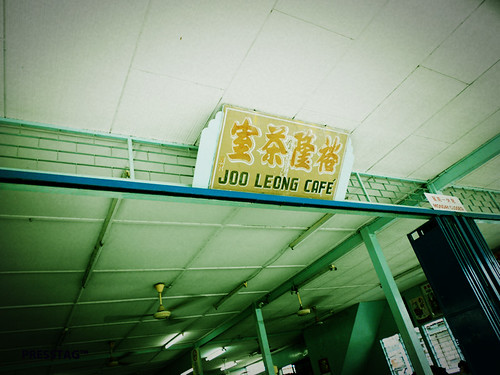
Joo Leong Cafe

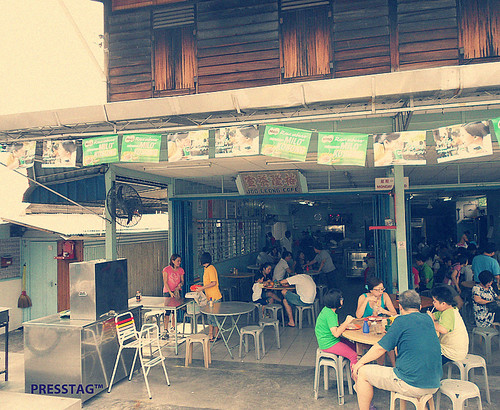
Many people were going in and out from this cafe with cars parking up to 50m along the roadsides and even at the opposite side of the road.
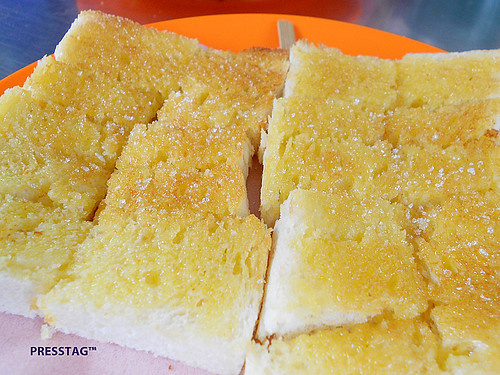
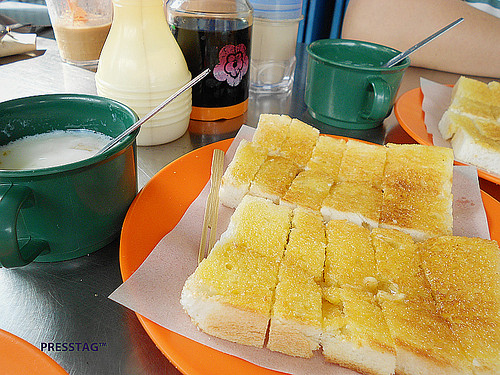
The famous self-made toasted breads with butter toppings. When sugar  was poured onto the surface of the bread during immediate serving, you can observe the melting of the sugar and the emerging of a glimmering texture.
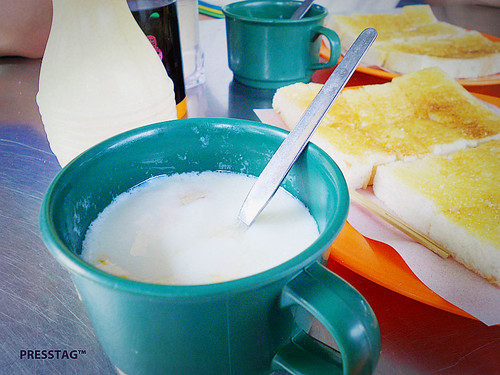
Half-boiled eggs in a cup
One set - noh te noh liap (two slices of bread and two half-boiled eggs)
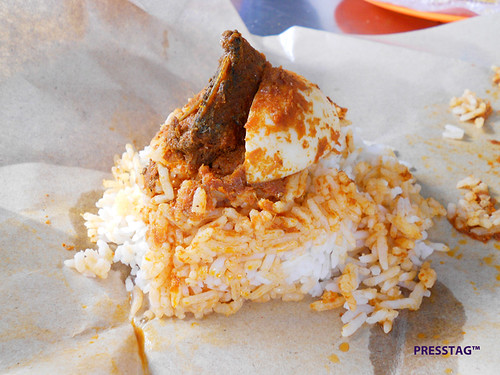
They also serve ikan bilis and fish nasi lemak 

By the way, during our visit, the three of us ordered a total of 12 slices of toasted bread, 10 half-boiled eggs, 2 packets of ikan bilis nasi lemak, 1 packet of fish nasi lemak, 1 cham peng, 1 teh peng and 1 kopi-O peng. :-D

All I can say is that, I've tasted better. :)

Location:

Joo Leong Coffe Cafe
179-H, Sungei Tiram, Bayan Lepas
Penang. West Malaysia.
Tel (1) : 010-4124865
Tel (2) : 012-4984865
Coordinate: 5°18'7"N   100°16'34"E

GO UP

Annah Rais Longhouse - Bidayuh Homestay


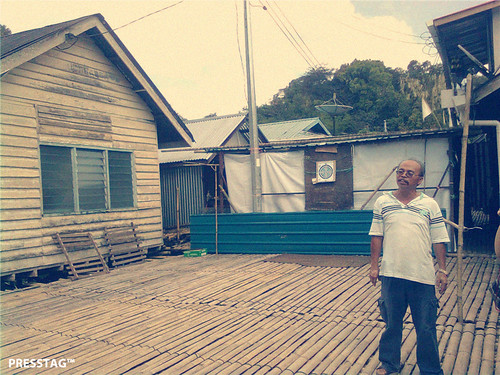
For the first time in my 4 years of stay in Sarawak, I've finally lay my first step on the famous traditional Bidayuh Longhouse. Its not really traditional actually. They have those not so modern, basic aluminium basins with basic plumbing system as well as basic electricity and basic 17" televisions.

Located about 60km away from Kuching city, this Bidayuh tribe's longhouse consists of more than 80 families and is said to have history of more than 8 generations.

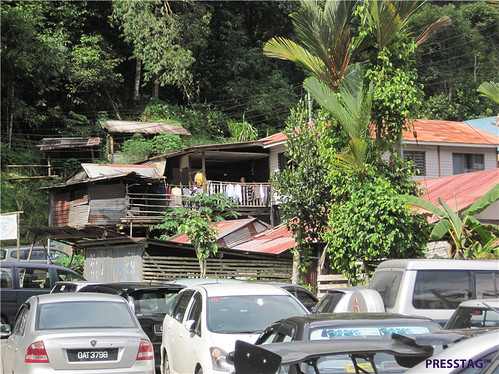
Upon entering this village, we were greeted with traffic jams and fully occupied car park (=.="").


I've always thought that human skulls were hung at the entrance door to the longhouses. (All because of the rumours and stories that brainwashed me when I was a kid). I was wrong! Maybe its true in the past but not in this modern age! 

The revolutionized longhouse welcomed us not with the skulls, but with the SUGAR CANE CRUSHER!!

The sugar cane CRUSHER!!

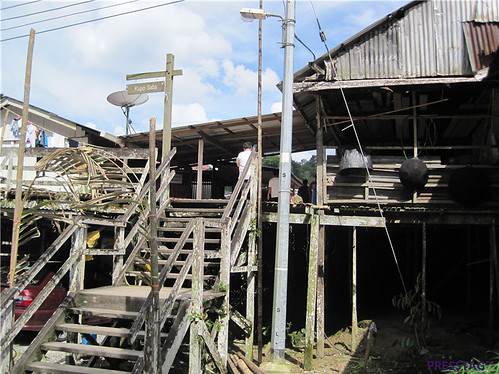
Entrance to the longhouse
Wooden bridge
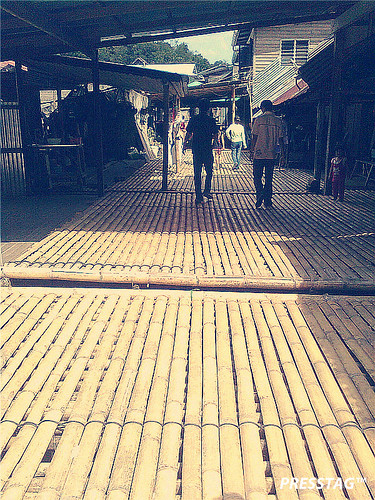
The passage along the longhouse with houses at the left and right sides that sheltered many families.
=)
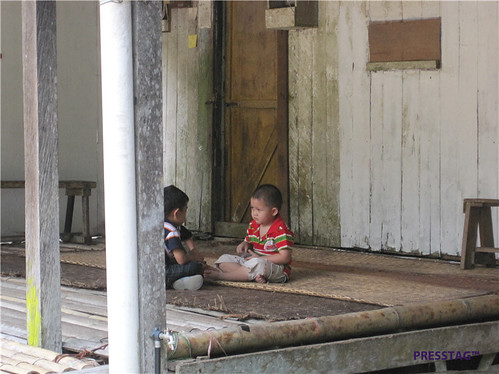
Family gathering
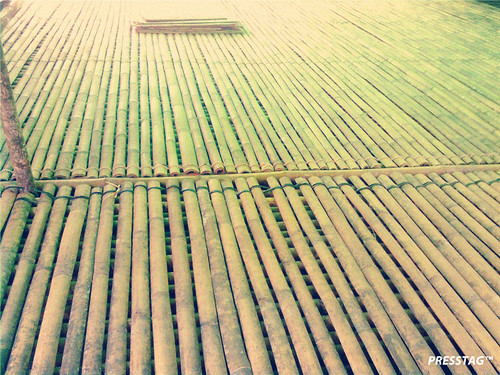
The flooring were made of bamboo sticks.
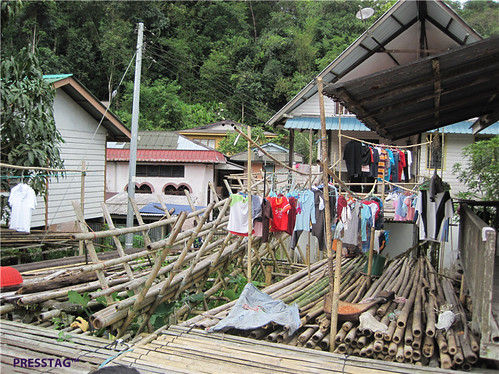
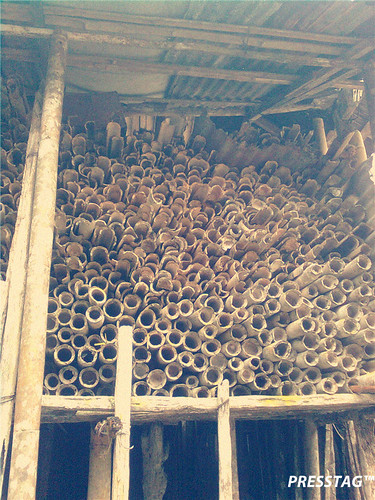
A collections of bamboo sticks stored for emergency replacements.
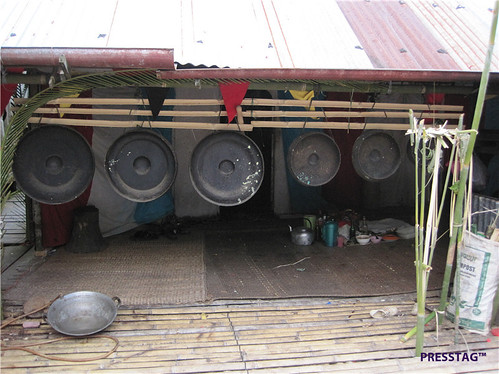
Gong Gong Gong~
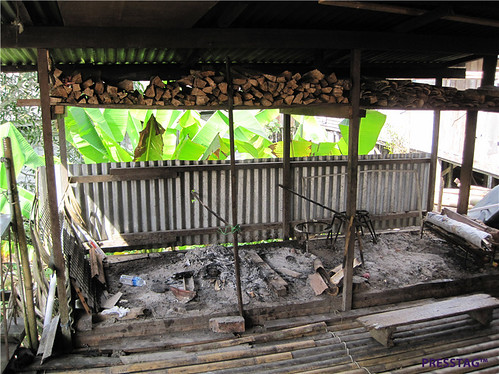
BBQ
We toured around the longhouse and watched some tourists trying the traditional blowpipe. With a small fees, they have three tries to blow the pipe with the aim of landing the darts on the targeted area. Each region of the targeted area have its own rewards in the form of monetary and soft drinks.

One of the resident setting up the blowpipe and darts.
The target!
The blowing rule - take a deep breath, aim and release all the air in your lung in an instance!
We ended the visit by entering the house of the head tribe.
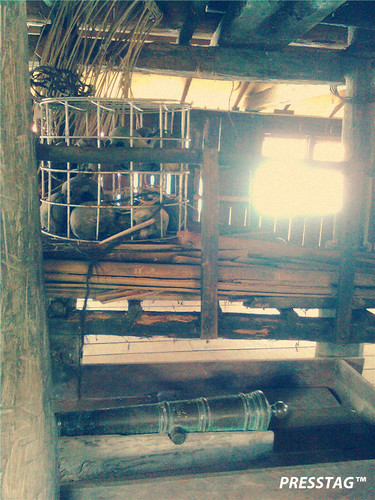
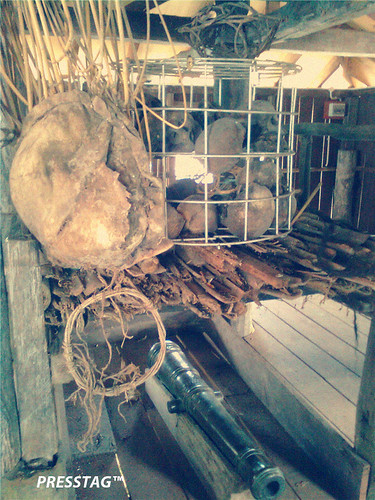
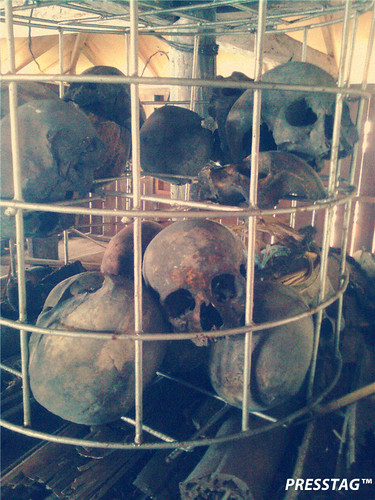
What's the thing beside the cage on the left side of this picture and guess what's in the cage??
Its a real human skulls.....

GO UP

Aerial View of Universiti Malaysia Sarawak


Aerial view of Universiti Malaysia Sarawak (photo by ZZYick)
A view of west part of UNIMAS campus. Green green roofs....

Can you spot how many roundabouts and water towers in this part of the campus? ^^

GO UP

Early signs of World War 3 ?


It all started with a self-immolation of a 26 year old fruit and vegetables street vendor at Tunisia due to harassment and humiliation from the local authorities.

Uprising began at Tunisia. Followed by Oman, Yemen, Egypt, Morocco, Iraq, Bahrain, and the recent ongoing war at Libya which took more than 10,000 lives.

Not to mention other minor protest and middle-ranged riots from Algeria, Lebanon, Jordan, Mauritania, Sudan, Saudi Arabia, Syria, Djibouti, Iran, Kuwait and Western Sahara.

A total of about 19 countries (probably more) involved in this 2010-2011 Middle East and North Africa protests. Bringing up to thousands of dead bodies and leaving millions, depressed, devastated and traumatized; by the loss of family and friends.

Most of it were due to poorly managed and corrupted government...

So, who's next?

Are these early signs of World War 3 predicted by Nostradamus ?

I do not know with what weapons World War 3 will be fought, but World War 4 will be fought with sticks and stones - by Albert Einstein

GO UP

March 11 Quake at Japan


Japan's biggest earthquake hit on 11 March 2011. This 8.9 magnitude quake brings tsunami as well as possibility of radiation leak by reactors in the Japanese nuclear plant.


The damage were apocalyptic....


Sendai
Sendai's port
Natori
Fukushima nuclear plant
Pictures above obtained from here.

However, i admire the Japanese level of discipline. They are indeed a systematic citizens.


GO UP

Hokkien Lang - Survives 2,000 years


Found this interesting facts circulating in the Facebook recently.

Do you know that Hokkien is the Ancient Imperial Language of China - 2,000 Years Ago?!!

Hokkien is:

1. The surviving language of the Tang Dynasty (618-907AD), China's Golden Age of Culture.

Note: The Hokkien we hear today may have "evolved" from its original form 2,000 years ago, but it still retains the main elements of the Tang Dynasty Language.

2. Hokkiens are the surviving descendants of the Tang Dynasty -- When the Tang Dynasty collapsed, the people of the Tang Dynasty fled South and sought refuge in the Hokkien (Fujian ) province. Hence, Hokkien called themselves Tng-lang (Tang Ren or People of the Tang Dynasty) instead of Hua Lang (Hua Ren).

3. Hokkien has 8 tones instead of Mandarin's 4. Linguists claim that ancient languages tend to have more complex tones.

4. Hokkien retains the ancient Chinese pronunciation of "K-sounding" endings (for instance, Hak Seng (student), Tua Ok (university), Thak Chek (read a book/study) -- the "k" sounding ending is not found in Mandarin.

5. The collection of the famous "Three Hundred Tang Dynasty Poems" (Tang Shi) sound better when recited in Hokkien/Teochew if compared to Mandarin.

6. Consider this for a moment: Today, the Hokkien Nam Yim Ochestral performance still has its roots in ancient Tang dynasty music. Here's the proof: The formation of today Nam Yim ensemble is typically seen in ancient Tang dynasty paintings of musicians.

7. Although not genetically-related, Hokkiens, Koreans and Japanese share many similar words (which are different from Mandarin).

That's because Hokkien was the official language of the powerful Tang Dynasty whose influence and language spread to Japan and Korea (just like Latin – where many words were borrowed by the English, French, Italian, etc).

To all 49 Million Hokkien Speakers:

Be Proud of Your Ancient Hokkien Heritage Language! Speak it Loud and Clear. Teach Your Future Generation this Imperial Language, Less it Fades Away. Be Proud Children of the Tang Emperors.

To all Mandarin-speaking friends out there -- do not look down on your other Chinese friends who do not speak Mandarin – whom you guys fondly refer to as "Bananas". In fact, they are speaking a language which is much more ancient linguistically complicated than Mandarin.

Keep in mind that Mandarin is just:

1. A Northern Chinese dialect (heavily influenced by non Han Chinese) that was elevated to the status of National Language by Sun Yat Sen for the sake of China’s national unity.

2. Mandarin was never spoken by your proud, imperial Tang Dynasty ancestors. It was probably spoken by the Northern (Non-Han) Jurchen, Mongols and Manchu minority. Start speaking the language of your ancestors today.

GO UP